Hang Clean.
The hang clean pulls a barbell from the mid thigh up to the shoulders in one explosive movement, catching it in a front rack. Starting from the hang instead of the floor makes it simpler to learn while still building serious power.

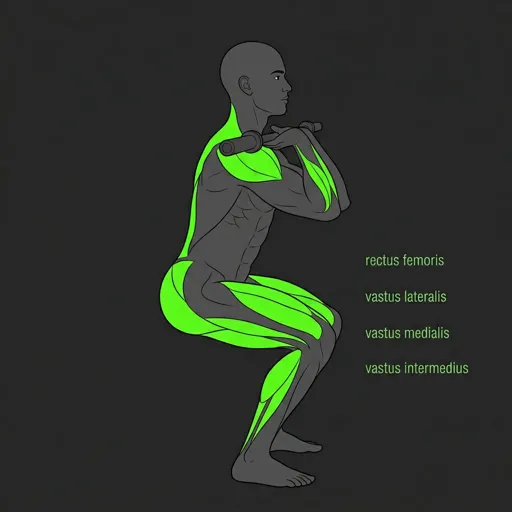
Step by step.
Stand holding a barbell at mid thigh with a shoulder width grip, double overhand or hook grip, back flat and chest up.
Dip slightly by pushing the hips back, keeping the bar close to your thighs. This is the start.
Explode by extending the hips, knees, and ankles together, shrugging the shoulders to drive the bar up.
As the bar rises, pull yourself under it and whip the elbows through to the front.
Catch the bar on your shoulders in a partial front squat, elbows high.
Stand to full lockout, then lower the bar back to the hang to reset.
Starting from the hang strips out the hardest part of learning to clean. Pulled from the floor, the lift has a long first pull where beginners round their backs and lose position before the explosive part even arrives. The hang clean begins at mid thigh and skips all that, so you can pour your attention into the piece that actually builds power, the violent opening of the hips. That is why coaches teach it first. It is the shortest road into Olympic lifting that does not bury you in setup technique, and it feeds straight into the power clean from the floor while sharing its DNA with the snatch.
Power here is a hip job. The usual error is muscling the bar up with a bent arm, a clumsy upright row, when the bar should float because the hips snap open and the whole body extends under it. The arms only bend to drag you under once that drive has already sent the bar moving. Sore forearms and a bar that feels heavy off the hang both point to arms doing what the hips should.
Most people miss the speed under the bar. Receiving the clean is an active drop into a partial squat, not a passive wait for the bar to land. Whip the elbows around and through to a high front rack fast, because slow elbows let the bar crash onto your wrists. Drill it light until that turnover happens on its own.
Train it for power, which means low reps, 3 to 5, full speed, and real rest between sets, since power evaporates the instant fatigue creeps in. When the bar starts to slow, the set is already over.
Common questions.
It starts at mid thigh, skipping the long first pull from the floor where beginners round their backs and lose position. That lets you focus on the explosive hip extension that builds power. Once the hang clean is solid, the power clean from the floor is a much smaller step.
You are pulling the bar up with bent arms like an upright row instead of driving it with your hips. The bar should float from an explosive extension of the hips, knees, and ankles, with the arms only bending to pull you under. Sore forearms mean the hips are not doing the work.
Whip the elbows around and through to a high front rack as fast as you can while dropping under the bar into a partial squat. Slow elbows let the bar crash onto your wrists. The catch is an active, fast turnover. Drill it light until the elbow speed is automatic.
The moment the bar starts moving slowly, since the hang clean trains explosive power that disappears as fatigue sets in. Keep the reps low, around 3 to 5, with full speed on every rep and adequate rest, rather than grinding high rep sets.


Run the numbers.
One-rep max.
Estimate your max from any rep count. Five formulas, full percentage table.
Plate calculator.
What to load for any target weight, in lb or kg.
RPE calculator.
Convert rate of perceived exertion to training percentages.
Wilks score.
Bodyweight-adjusted total for comparing strength across weight classes.
DOTS score.
The IPF's newer bodyweight-adjusted scoring formula.
IPF GL points.
The IPF's official Goodlift score, in use at meets since 2020.
Volume calculator.
Weekly sets per muscle group, tonnage, and load management.
Strength ratio.
Screen your squat, bench, and deadlift to find the lift that is lagging.
Stop calculating.
Start tracking.
Log every set in RepRaptor. Free forever for lifters.