Incline Dumbbell Curl.
The incline dumbbell curl is done lying back on an incline bench, which lets the arms hang behind the body and stretches the biceps before each rep. That stretched start hits the long head harder than a standing curl can.

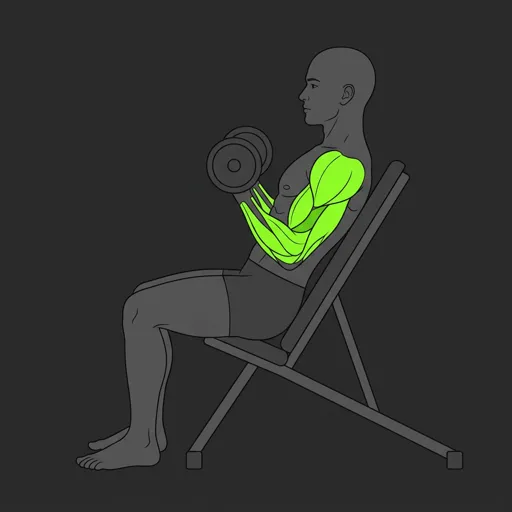
Step by step.
Set a bench to about 45 to 60 degrees and sit back with a dumbbell in each hand, arms hanging straight down.
Let the arms hang behind your torso with palms facing forward. This stretched position is the start.
Curl the dumbbells up by contracting the biceps, keeping the upper arms still.
Squeeze hard at the top, then lower under control all the way back to the hanging stretch.
Keep your back on the pad and your elbows from drifting forward.
Only the forearms move. The upper arms stay pinned behind you the whole set.
Reclining the bench drops your arms behind the line of your body, which puts the biceps on stretch before the rep even starts. The long head crosses the shoulder, so that lengthened position loads it in a way a standing curl never reaches. If the outer, peaked part of your biceps lags, the incline dumbbell curl goes after it more directly than a standing dumbbell bicep curl does.
Guard that stretch. The instinct at the bottom is to let the elbows drift forward and make the rep easier, but that throws away the position you reclined to get. Keep the upper arms hanging straight down behind you and let the dumbbells reach a full stretch every rep. If the elbows keep creeping toward vertical, sit back further and lighten up.
Expect to curl less than you do standing. The disadvantaged start means lighter dumbbells, and that is exactly right here. Pick a weight you can control through the full hang and let the deep stretch do the work. Heaving with momentum just drags the shoulders in and ruins the angle.
Keep it in the 10 to 15 range as part of your arm work. It covers the stretched, long head end of the biceps, so it slots in well next to a preacher curl, which loads the short head in the contracted position. Run the two together and you cover both ends of the muscle.
Common questions.
Lying back lets your arms hang behind your body, which stretches the biceps before each rep. Because the long head of the biceps crosses the shoulder, that stretched position loads it more than a standing curl can. The incline curl targets the outer, peaked part of the biceps that a standing dumbbell bicep curl tends to miss.
Because letting them swing forward makes the bottom of the rep easier, but it cancels the stretch you reclined to create. Keep the upper arms hanging straight down behind you and let the dumbbells reach a full stretch each rep. If you cannot stop the elbows creeping up, set a steeper bench angle and use less weight.
The stretched starting position puts the biceps at a mechanical disadvantage, so the muscle has to work harder for less load. Using lighter dumbbells than you would standing is normal and correct. The value here is the stretch and the long head emphasis, not the weight, so do not chase a number at the cost of the position.
Yes. The incline curl loads the stretched, long head end, so pairing it with a movement that hits the short head in the contracted position, like a preacher curl, covers the whole muscle.


Run the numbers.
One-rep max.
Estimate your max from any rep count. Five formulas, full percentage table.
Plate calculator.
What to load for any target weight, in lb or kg.
RPE calculator.
Convert rate of perceived exertion to training percentages.
Wilks score.
Bodyweight-adjusted total for comparing strength across weight classes.
DOTS score.
The IPF's newer bodyweight-adjusted scoring formula.
IPF GL points.
The IPF's official Goodlift score, in use at meets since 2020.
Volume calculator.
Weekly sets per muscle group, tonnage, and load management.
Strength ratio.
Screen your squat, bench, and deadlift to find the lift that is lagging.
Stop calculating.
Start tracking.
Log every set in RepRaptor. Free forever for lifters.