Single Leg Hip Thrust.
The single leg hip thrust drives the hips up on one leg with the upper back on a bench, forcing one glute to do all the work. It exposes side to side differences and builds glute strength without needing any load to start.

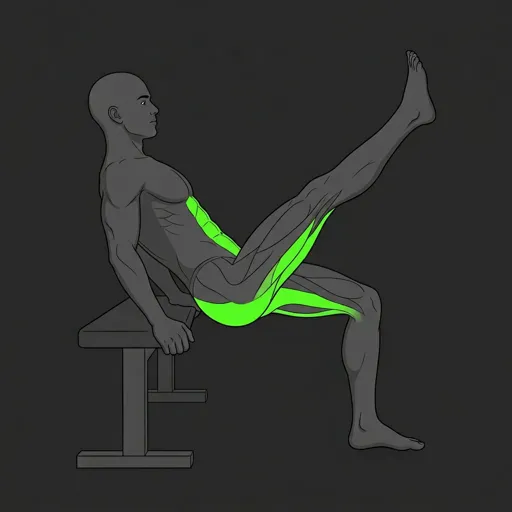
Step by step.
Sit with your upper back against a bench and plant one foot flat on the floor, knee bent near 90 degrees.
Lift the other foot off the floor by extending that leg or holding the knee toward your chest. This is the start.
Drive through the working heel to extend your hips until your torso is parallel to the floor.
Squeeze the working glute hard at the top and keep your hips level.
Lower under control without letting the unloaded hip drop.
Finish all reps on one side before switching legs.
Lifting one foot turns the hip thrust into an honesty test. With both feet down, your stronger glute quietly takes more of the load and you never notice. Up on one leg there is nowhere to hide, and the working glute has to produce the whole drive. Most lifters find a real gap between sides the first time, and closing it is worth the trouble, because a dominant side left alone bleeds into your squat and deadlift too. Train the weaker leg first, then give the stronger one only what the weaker one earned.
The rep counts only if the pelvis stays square. The moment the free side drops, your trunk and lower back jump in and the working glute gets a breather. Cue a level pelvis from first rep to last, as if a glass of water were balanced on your hip bones. Lose that level and the set is too hard, which is your signal to strip back to a cleaner version before you think about load.
Bodyweight goes a long way here. One glute carrying your entire hip drive is plenty of stimulus on its own, so this travels well to home training and rehab where a loaded bar is not an option. Earn clean, level bodyweight reps, then add a dumbbell on the working hip when you want more.
Keep it in the 10 to 15 rep range per leg with a pause and a hard squeeze up top. Think of it as the accessory that audits what your heavy hip thrust hides, and the most direct fix when one glute is lagging.
Common questions.
Working one leg at a time stops a stronger glute from carrying a weaker one, so each side does its own work. That exposes and fixes left to right imbalances a regular hip thrust hides, the same gaps that creep into your squat and deadlift. Train the weaker side first and match the stronger to it.
Hold your pelvis level throughout, as if balancing a glass on your hip bones, and keep the unloaded side from dropping. When it dips, the trunk and lower back take over and the working glute rests. If you cannot hold it level, the rep is too hard, so regress before adding load.
Not to start. One glute driving your entire hip extension makes the bodyweight version challenging already, which is why it suits home training and rehab. Earn clean, level bodyweight reps first, then hold a dumbbell on the working hip once bodyweight stops being enough.
It is an accessory to the bilateral hip thrust and a targeted fix for a lagging glute. Use the heavy barbell or dumbbell version for overall strength and add single leg work to even out the sides. Run it for 10 to 15 reps per leg with a pause and squeeze at the top.


Run the numbers.
One-rep max.
Estimate your max from any rep count. Five formulas, full percentage table.
Plate calculator.
What to load for any target weight, in lb or kg.
RPE calculator.
Convert rate of perceived exertion to training percentages.
Wilks score.
Bodyweight-adjusted total for comparing strength across weight classes.
DOTS score.
The IPF's newer bodyweight-adjusted scoring formula.
IPF GL points.
The IPF's official Goodlift score, in use at meets since 2020.
Volume calculator.
Weekly sets per muscle group, tonnage, and load management.
Strength ratio.
Screen your squat, bench, and deadlift to find the lift that is lagging.
Stop calculating.
Start tracking.
Log every set in RepRaptor. Free forever for lifters.